
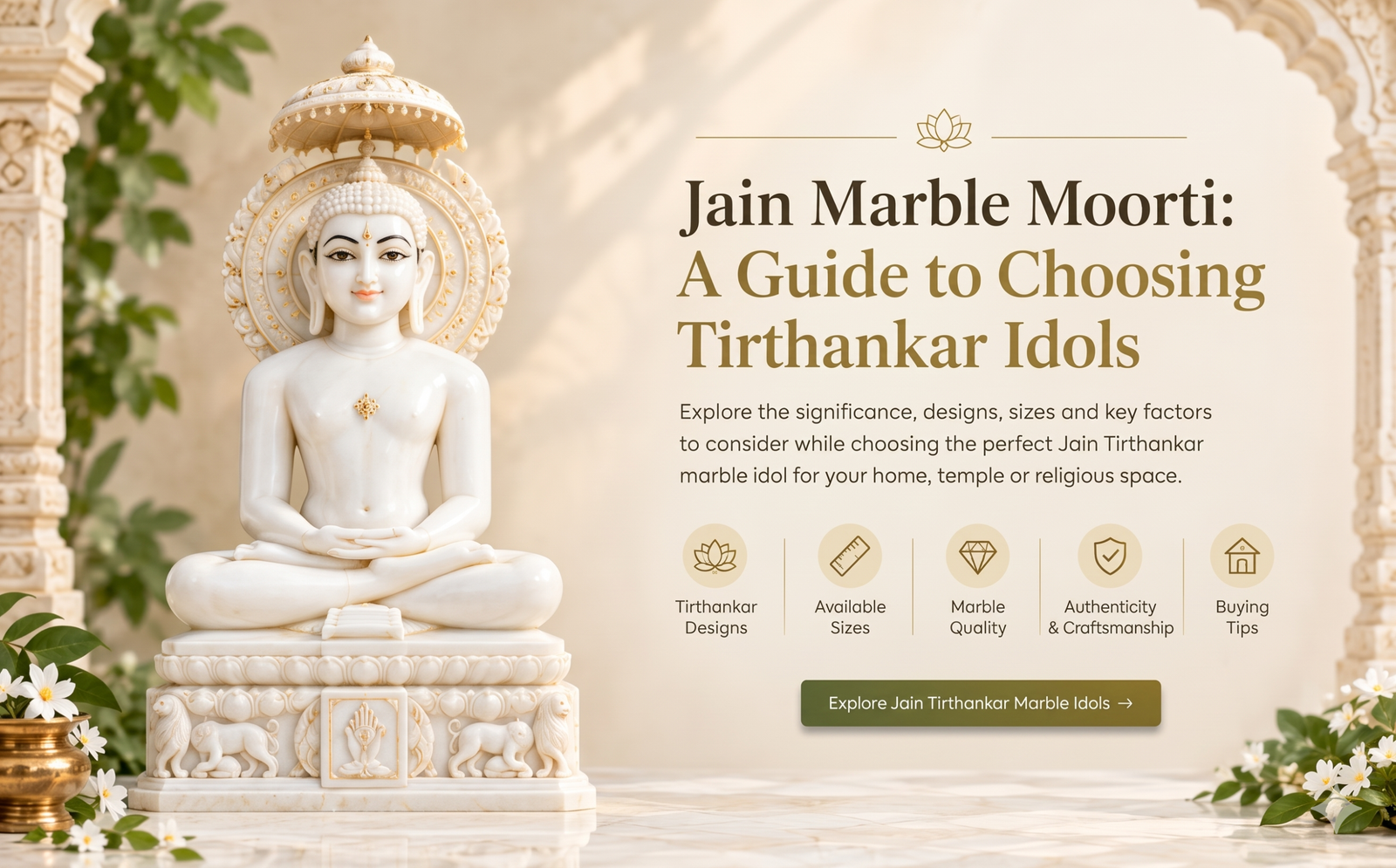
Choosing a Jain marble moorti is a whole lot more than just selecting a pretty statue - it's about finding the right one that really captures the essence of your chosen Tirthankar, fits in with your community's traditions and will actually work in the space you have set aside for it. The quality of the marble, how it's carved, proportions and finish all matter too. With this guide, we're going to walk you through what to look out for when buying a Jain marble idol.

Get to Know the Tirthankar You Need

In Jain tradition, there are twenty-four Tirthankars each with their very own unique emblem, or lanchhan. Before you go out and buy a Jain Tirthankar idol, take the time to figure out which Tirthankar is the one you need and double check that emblem with someone who knows what they are talking about - a respected Jain authority or someone who works at a local temple would be perfect for this job. For example, if you go for Rishabhdev, also known as Adinath, you'll be looking for a bull - whereas Parshvanath is usually identified by a nice big serpent hood. The emblem is often shown on the pedestal - which can be a big help when you're trying to tell one figure from another as they can look pretty similar in their meditative poses.

When it comes to selecting a Parshwanath marble idol or some other specific figure, take a good hard look at the product description and any pictures you can get hold of. Don't just rely on the name - do your research and confirm the identity, emblem and any tradition specific details before you make a purchase.

Choose the Right Posture & Tradition

You’re going to find that Jain idols are best represented in a seated meditation posture or a standing meditative posture. Just check with your local temple, community practice and available space before you choose – a seated figure can really work well in a compact shrine, but you’ll need a bit more space for a standing figure and a suitable base.

Now here’s the thing – there are some differences between Jain traditions and communities when it comes to practices and visual conventions – for example Shvetambar and Digambar representations can follow different conventions when it comes to adornment and appearance. Don’t just go for any old idol – do your homework first and check what your community prefers. If the idol is actually going to be used in a temple or for a formal consecration ceremony then get in touch with the temple committee or a religious guide rather than just treating the decision as purely decorative.

Pick the Right Size For the Job

The marble is going to have a big impact on the overall look and feel of the idol – it will affect how it looks, the detailing and how you’re going to have to look after it in the long term. When it comes to comparing white marble Jain statues, take a good hard look at the surface – an even finish, clean carving and no visible cracks, chips, stains or repairs are all positives. You may find that natural marble has some subtle veins and variations in it – these aren’t automatically a problem, but are something you really do need to be aware of before you make a purchase.

Do ask your seller what type of marble they are using and is it a natural stone – and get them to send over some close-up photographs of the face, hands, emblem, pedestal and other fine details. If you’re buying online then ask for images of the actual piece rather than just relying on catalogue pictures – and confirm what finish and care instructions come with the idol – you don’t want to use any harsh chemicals that could damage the marble.

Getting a Good Look at the Craftsmanship and Details

You want a carving that looks well-balanced and finished with care, right? Take a close look at the face, eyes, fingers, posture, clothes details, and whether the figure is properly aligned with its pedestal. It should look like the features were thought out, rather than rushed. Make sure the base is stable and that the emblem is clear and unmistakable.

Ask who the craftsman is, what quality control measures they follow, and if minor imperfections are to be expected. Don’t assume custom orders are possible without confirming first. Get a written confirmation of the agreed-upon specifics, especially if you’re ordering a popular figure like a Tirthankar – dimensions, what kind of marble you’re getting, the finish, and if the base or any other accessories come with it.

Weighing Up Price, Delivery, and Packaging

Prices for Jain marble idols can vary depending on size, type of marble, how much work went into the carving, finish, and so on. When comparing similar items, keep an eye on the overall package, not just the sticker price. Get a quote and check if taxes, packaging, insurance, and delivery are all included.

Those statues are heavy, and marble can break easily in transit. Before you make a purchase, find out how your idol will be packed, which areas they deliver to, how long it’ll take to get there, and what the policy is if your statue shows up damaged. And make sure you have the return, replacement, and cancellation policies in writing – especially if you’re buying something big like a temple idol. For larger items, talk about placement and installation arrangements before you hand over the cash.

Taking Care of Your Marble Idol

Regular TLC (tender loving care) will help keep your marble looking its best. Dust it with a soft, clean cloth, and follow the maker’s advice for any special cleaning rituals. Avoid using acids, bleach, or any abrasive cleaners – they can damage the marble. If you do need to clean it with liquids during worship, find out the best way to dry it off and prevent water from getting stuck in the cracks.

When moving your idol around, handle it with care, and never try to lift something heavy by its delicate details. Use a sturdy platform that can support the weight. If you’ve got a valuable or big idol, talk to a professional for advice on how to handle and maintain it.

Questions to Ask Before Buying a Jain Marble Moorti

Before you buy a Jain marble statue, make sure you’ve got the basics covered: who or what Tirthankar is being represented? Is the lanchhan (the image’s face or features) correct? Does the posture and look of the idol suit your tradition? What kind of marble are they using? Can you see photos of the actual idol? How’s it going to be packed and shipped? What are the rules on damage, returns, and replacements?

For temple installations or consecration, get guidance from the relevant religious authority – it’s not just about what the seller says.

Finding the Right Jain Marble Moorti for You

Choosing a Tirthankar statue thoughtfully is all about balancing what you need with what you’re looking for in a craft, material, and size. Start by confirming which Tirthankar and emblem you’re looking at, then take a closer look at the posture, marble quality, carving, dimensions, and delivery arrangements. Keep all the details you agree on with the seller written down, especially if you’re ordering online or buying something big.

Take a look at the Jain moorti collection at Mahaveer Moorti Kala to compare different designs and product details. Before you place an order, contact the team to confirm the specific idol, measurements, material, delivery options, and current availability. Taking your time and getting advice from knowledgeable community members will help you choose an idol that’s just right for you.

Leave a Reply

Your email address will not be published. Required fields are marked *