
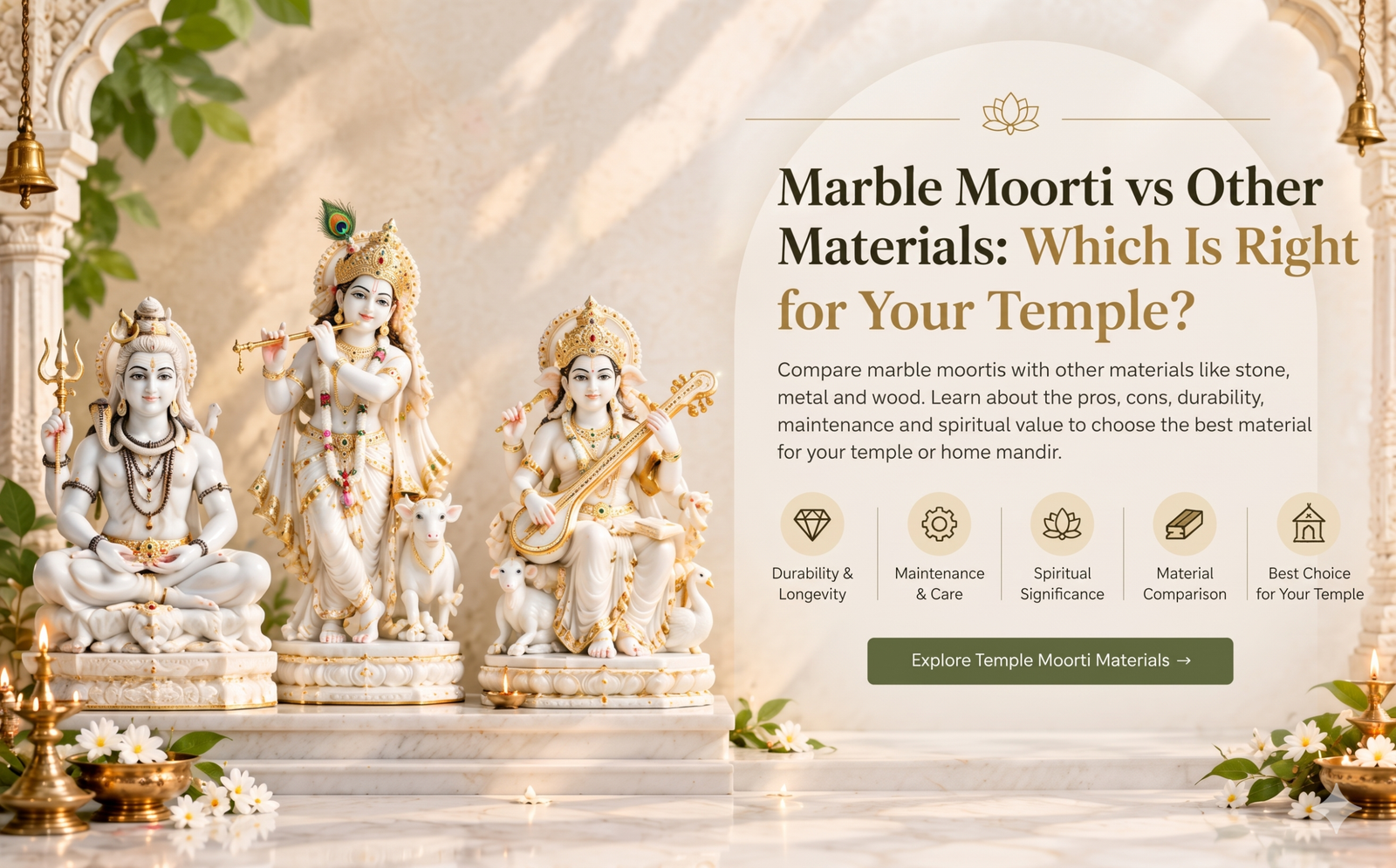
Selecting a beautiful design for your moorti is only half the battle. What really matters is the type of material you choose - its appearance, weight, maintenance needs, durability and overall cost all play a huge role in the long run. Marble, brass, wood, resin and clay each bring their own unique qualities to the table. Understanding these differences can help you find a moorti that fits your devotional style, available space and budget. This guide will break down the most popular materials and give you some practical tips on selecting the right one.

So Why Does Moorti Material Really Matter?

A sacred idol will likely be a fixture in your home or temple for years to come - or even for generations. Its material has a big impact on how it looks, how easily it can be moved (if at all) and how much TLC it will need to stay looking its best. Before you start shopping, think about where the moorti will live, whether it will ever need to be moved, what kind of worship it will be used for and what kind of look you're going for.

There is no one-size-fits-all approach to choosing a moorti. The right choice depends on what you need from it in terms of practicality and what your personal preferences are. 

1. Marble Moorti: A Classic Choice

Marble moortis are super popular because of their natural stone look, smooth finish and amazing detail work. White marble is particularly good at creating a traditional look that fits in perfectly with lots of different home mandirs, prayer rooms and temple interiors.

Why Marble Moortis are a Good Bet:

  • They look amazing with a classic, timeless feel that never goes out of style.
  • They’re perfect for intricate carvings, decorative bases and larger statues.
  • You can get marble moortis in all shapes and sizes to suit your space.
  • They can be a stunning focal point in a dedicated prayer space.

Important Considerations:

Marble moortis are pretty heavy so you need to be careful not to knock them over. Some surfaces may also stain if you use the wrong cleaning products or oils, so check the marble is suitable for its intended use.

Marble is a great choice if you want a permanent-looking centrepiece and you can give it a stable home.

2. Brass Moorti: A Practical Option 

Brass idols have a warm, golden look that’s perfect for traditional designs. Plus, smaller brass moortis are a great option if you like to move your idols around as part of your daily worship.

The Benefits of Brass Moortis:

  • They’re built to last – perfect for regular handling.
  • They have a warm, golden glow.
  • They’re perfect for compact home mandirs and smaller devotional spaces.
  • With the right care, they can keep looking great.

Things to Keep in Mind:

Brass can tarnish over time and may need polishing to keep it looking its best. Cleaning requirements depend on the finish, so check with the seller for tips.

Brass is a good choice if you like the traditional look of metal and want a bit of flexibility when arranging your mandir.

3. Wooden Moorti: A Natural Choice

Wooden idols bring a natural, warm feel to a devotional space. They’re great if you’re looking for something that fits in with traditional decor.

Why Wooden Moortis are a Good Idea:

  • They have a natural look and feel.
  • They often have great grain patterns that add to their character.
  • They’re generally lighter than stone idols, so easier to move around.

Important Considerations:

Wood is a bit more high-maintenance than some other materials – it can react to moisture and humidity changes which can damage the surface. Make sure you know what type of wood you’re getting, how to take care of it and what to avoid.

Wood is a great choice if you like natural materials and are prepared to give your moorti the TLC it needs.

4. Resin Moorti: Weighing the Options

Resin & composite idols come in all shapes, colours & styles – you can get em in any shape or colour you want – and they’re often a lot lighter than the equivalent stone statues.

Pros of resin moortis:

  • Theyre nice and light, so you can easily move em around.
  • You can get em in loads of different colours & finishes – thats a plus.
  • From what i can see, theres a style of decorative statue for just about every room in the house.

Things to Keep in Mind:

The quality varies all over the shop. If you dont take care you might end up with a finish thats scratched or faded – esp if you use the wrong sort of cleaner and dont keep it out of direct sunlight. Always check the description before you buy – dont assume its all solid stone.

If what you’re after is something lightweight that looks the part, resin might be the ticket.

5. Clay Moorti: Keeping it Simple

Clay idols & statues are often associated with traditional crafts & seasonal festivals – theyve got a bit of an old school feel to em. And they come in all sorts of different styles & price points.

Marble vs Other Materials: Quick Comparison

Material Appearance Maintenance Practical consideration
Marble Classic stone finish Gentle cleaning Heavy; protect delicate details
Brass Warm metallic shine May require polishing Check finish and tarnish care
Wood Natural grain Keep moisture controlled Finish and wood type matter
Resin Varied colours and styles Gentle surface cleaning Quality varies by product
Clay Handmade, earthy appearance Avoid unsuitable moisture Can be fragile

Which Moorti Material Is Best for Your Temple?

For a large home mandir or a permanent temple installation, a marble mandir could be the right choice because of its exquisite carvings and substantial presence. For smaller spaces where moving the idol is a consideration, however, brass may prove more practical. A wooden mandir offers a natural character, while resin provides lightweight options with a wide range of finishes to choose from – and clay could be suitable if you’re looking to create a seasonal or traditional decorative element.

Think about your budget , the size of your space, what kind of maintenance you’re okay with and how often you plan on moving the idol. You should also take into account whether you follow any specific traditions when it comes to the form or material of the deity. If you have specific religious needs, look for the advice of someone who is knowledgeable in the field.

Buying Tips Before You Place Your Order

Before buying a marble moorti, or any other type of idol, take a moment to go through these practical checks:

  1. Double check the size of the space where it will be placed and make sure you measure the platform first before ordering.
  2. Read over the product description carefully to make sure you know exactly what you’re getting.
  3. Have a good look at the photos to get an idea of the carving quality, finish and any imperfections that are visible.
  4. Ask about weight, packaging, delivery costs and estimated arrival date.
  5. Confirm what the seller’s policy is in the event of damaged products, returns or replacements.
  6. Get some advice on how to clean the material properly.

When comparing products dont just look at the photos or price – make sure the material, size and any extra features match your needs.

Explore Marble Moortis at Mahaveer Moorti Kala

If you like the classic look of a carved marble, then have a look at what Mahaveer Moorti Kala has to offer. Their website has categories including Ganesh, Jain Moorti, Parshvanath, Nakoda Bhairav, Radha Krishna and Saraswati.

Have a browse through the available designs at Mahaveer Moorti Kala and take a closer look at the individual product details – including dimensions, finish and price. If anything looks unclear, get in touch with the team before ordering to confirm the material, availability and delivery arrangements.

Frequently Asked Questions

Is marble better than brass for a home temple?

Honestly, neither material is a clear winner. Marble is great if you like the look of stone, while brass provides a nice warm metallic finish and is generally easier to move around in smaller spaces - it really depends on your personal preferences.

Which moorti material requires less maintenance?

This really depends on what you're looking at - marble is a bit finicky and needs gentle cleaning and protection from bumps, while brass needs the occasional polish. Wood, resin and clay all have their own unique care requirements.

Are marble moortis suitable for long-term use?

Marble can last for years with a bit of TLC and care. Just be sure to protect the delicate features from bumps, clean it gently and make sure it's securely in place.

How do I choose the right moorti for my budget?

Try to compare things like material, size, carving, finish and overall cost . Get a clear idea of what you're getting for your money by asking the seller for clear specifications and a final quote before making a decision.

How should I clean a marble Radha Krishna murti?

Use a soft cloth for routine dusting and avoid abrasive materials or harsh chemicals. Take extra care around delicate decorative elements and follow the seller's recommendations for the specific marble and finish.

Leave a Reply

Your email address will not be published. Required fields are marked *